Tips from a two-time malaria survivor
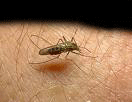 Malaria
is a serious issue for anyone traveling in
sub-Saharan Africa, even more so for cyclists who will spend
considerable time
in villages and away from major medical centers. Your best defense is a
good
mosquito net, liberal use of repellent and covering exposed areas as
soon as
the sun starts going down. You'll also probably want to take
prophylactics.
These are drugs that guard you against the disease, but are never 100%
effective. Newl resistant strains of malaria are cropping up all the
time so you
have to stay abreast of the situation.
Malaria
is a serious issue for anyone traveling in
sub-Saharan Africa, even more so for cyclists who will spend
considerable time
in villages and away from major medical centers. Your best defense is a
good
mosquito net, liberal use of repellent and covering exposed areas as
soon as
the sun starts going down. You'll also probably want to take
prophylactics.
These are drugs that guard you against the disease, but are never 100%
effective. Newl resistant strains of malaria are cropping up all the
time so you
have to stay abreast of the situation.
We're not medical experts, but we have decided to share what we've
learned
about malaria in hope of leading you in the right direction. Be sure to
contact
your local Tropical Disease Center to get advice from a specialist.
here’s what we’ve learned
Some medical professionals may tell
you that you'll build up
a resistance to malaria after having spent an extended period of time
in a
malaria zone. As far as we can tell this is absolute rubbish, because
locals
from Senegal to Malawi all complain of being effected by the sometimes
deadly
illness. Lariam, a once popular anti-malarial, has a reputation for
causing serious
side-effects such as nightmares, paranoia, and in extreme cases,
irreversible
mental-illness. We decided those side-effects weren't worth the risk.
Chloroquine alone is another option, but only in regions categorized by
the WHO
as zone 1 (low resistance, eg Morocco, Egypt). In zone 2 (medium
resistance, eg
Mauritania and northern Senegal) one can take a combination of
chlorquine plus
proguanil, which is what we did. In zone three regions (high
resistance, all
other countries up to Zambia) we took a daily 100mg dose of
doxycycline, which
is actually an anti-biotic. One major side-effect of doxycycline is
that it can
make you more sensitive to sun. Fortunately, we didn't have this
problem.
Anti-malarials can be very expensive when purchased in Europe or North
America.
We bought all medicines in Africa, where they are readily available and
cost a
fraction of what you pay in the West. Although there have been recent
scares
about fake drugs flooding the markets in Africa, most reputable
pharmacies will
stock drugs imported from India (one of the world's largest producers
of
pharmaceuticals) which are often manufactured in cooperation with a
reputable
Western pharmaceutical company.
watch
out
for
these symptoms
It's not always easy to know if you've got malaria,
especially if you're taking prophylactics because these drugs may mask
symptoms. Here is a list of symptoms associated with malaria:
- fever
- chills
- sweats
- headache
- body aches
- nausea and vomiting
- fatigue
Malaria symptoms will occur at least 7 to 9
days after being bitten by an infected mosquito.
Malaria may cause anemia and jaundice. Malaria infections with
Plasmodium falciparum, if not
promptly treated, may cause kidney failure, coma, and death. Some
travelers may
still develop malaria up to a year after returning from a malarious
area.
get
help
See a doctor immediately if you develop malaria-like
symptoms. In many cases medical help may not be available, so
it is
imperative that you carry an emergency treatment. We carried a supply
of
coartum. If you fall ill and suspect it's malaria, you can use coartum
for
emergency self-treatment. Just follow the usual dosage instructions
printed on
the package. Even if you can find a doctor, in many out of the way
places it’s
unlikely that medical professionals will have malaria testing kits.
Most
medical professionals in Africa usually just assume it's malaria if
you've got
a high fever. Simple-to-use self testing kits for malaria are available
in
Europe and North America, so you may buy a couple before you
head off on
your trip.
We both came down with a mild form of malaria twice. It was not the
crisis we
had imagined. There was certainly no need to wonder if the travel
insurance
covers medical evacuation. We
were overcome
with a heavy fatigue, listlessness and high fever. But just a couple of
days
after beginning the treatment we felt better and were able to get back
on the
bikes. We were lucky, but malaria can be fatal so do take any symptoms
seriously.
Check out the Center for Disease Control
for country-by-country
specific health information.

If you enjoyed this post, please share it with others via Twitter.
This is a serious issue, so please share what you know in the comment section below.

| Get World Biking Newsletter |
| Email: |
| |


If you enjoyed this post, you'll like these posts, too:
The diva cup: help for female cyclists--leave stress and mess behindChoosing the right saddle: women have special needs
Cycling with a partner: men and women aren’t created equally
check out more photos from our trip
contact us at: worldbiking@gmail.com
